
S&P 500 Hits Record High, Surpassing 7,100:
Stocks rallied last week amid investor optimism for an end to the war in the Middle East and the resumption of normal global trade.
The S&P 500 Index rose 4.54% while the Nasdaq Composite Index picked up 6.84%. The Dow Jones Industrial Average advanced 3.19%. The MSCI EAFE Index, which tracks developed overseas stock markets, increased 2.15%.1,2
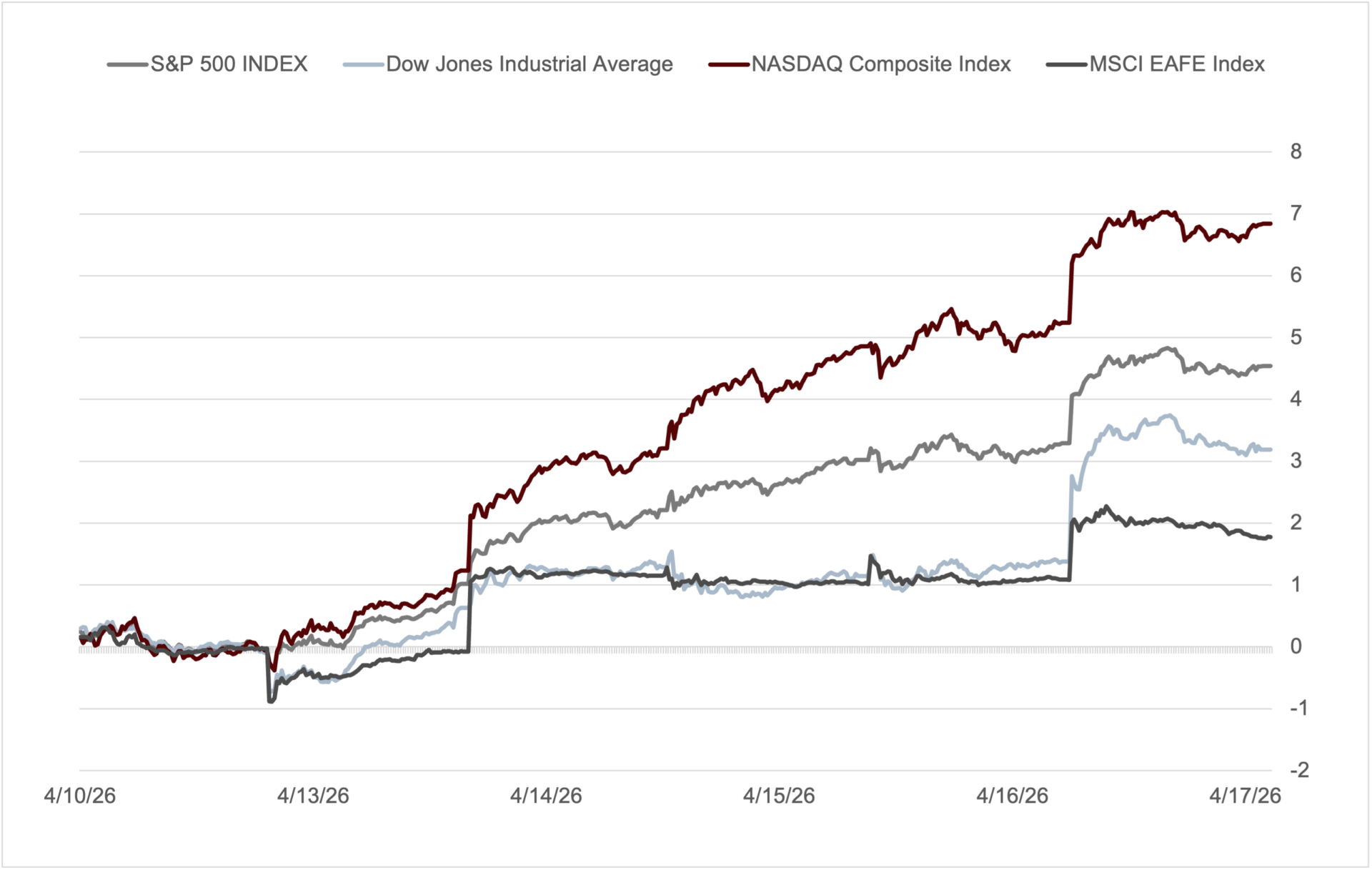
Source: Bloomberg Finance, L.P. (Performance data normalized 04/10/26 = 0)
Shift to “Risk-On” from “Risk-Off”
Stocks continued to ride the hopeful sentiment of a ceasefire at the start of last week, with all three averages advancing. The S&P 500 has recouped all its losses since the start of the war.3
Momentum accelerated through midweek as investors shifted from “risk-off” to “risk-on.” The White House signaled that the war was “very close to over” amid reports that further talks were under discussion.
At Wednesday’s close, the S&P advanced for the 10th time out of the last 11 trading sessions, while the Nasdaq marked its 11th straight close in the green.4
Stocks pushed higher again on Thursday, with the Nasdaq recording its longest winning streak since 2009. The week wrapped on a high note after Iran’s foreign minister announced the Strait of Hormuz was “completely open” as negotiations continue. Oil prices dropped by roughly 10% on Friday, sparking another solid day on Wall Street.5,6
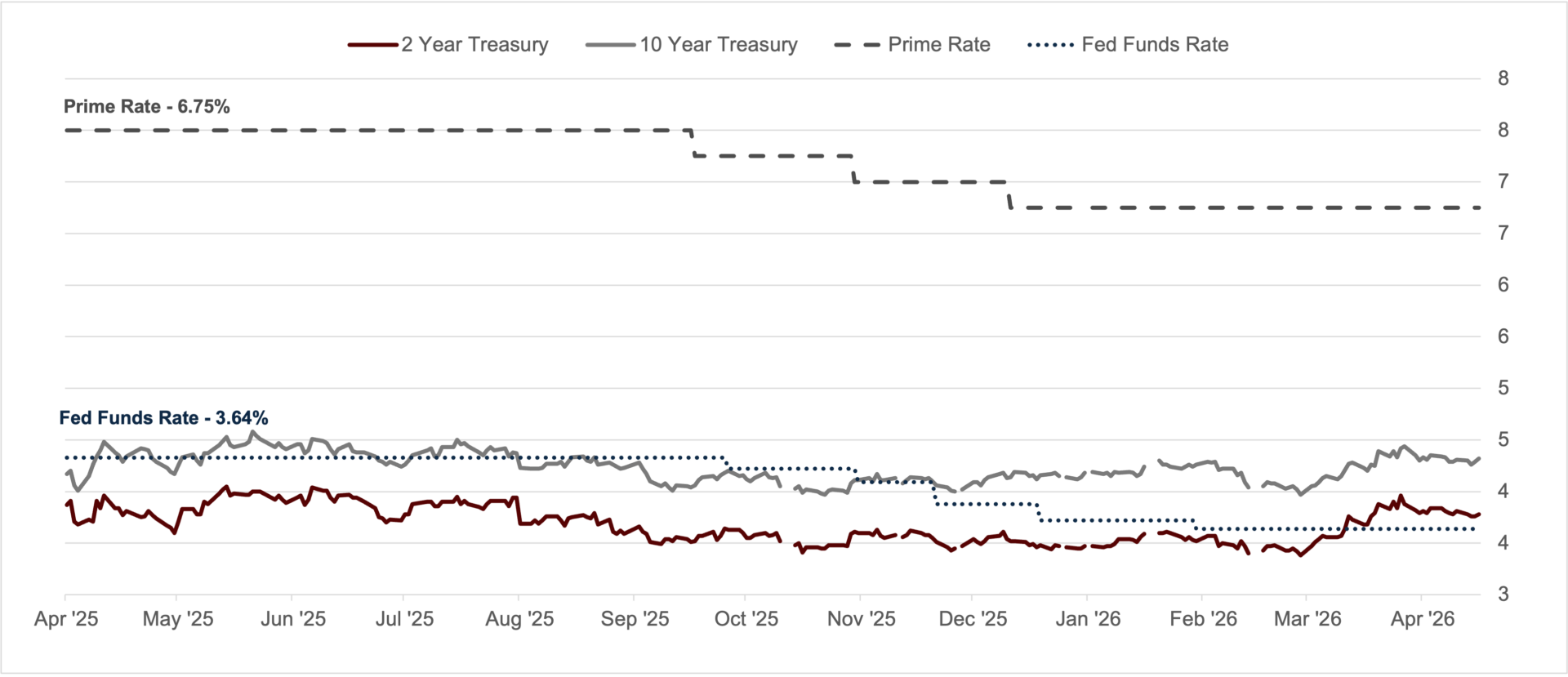
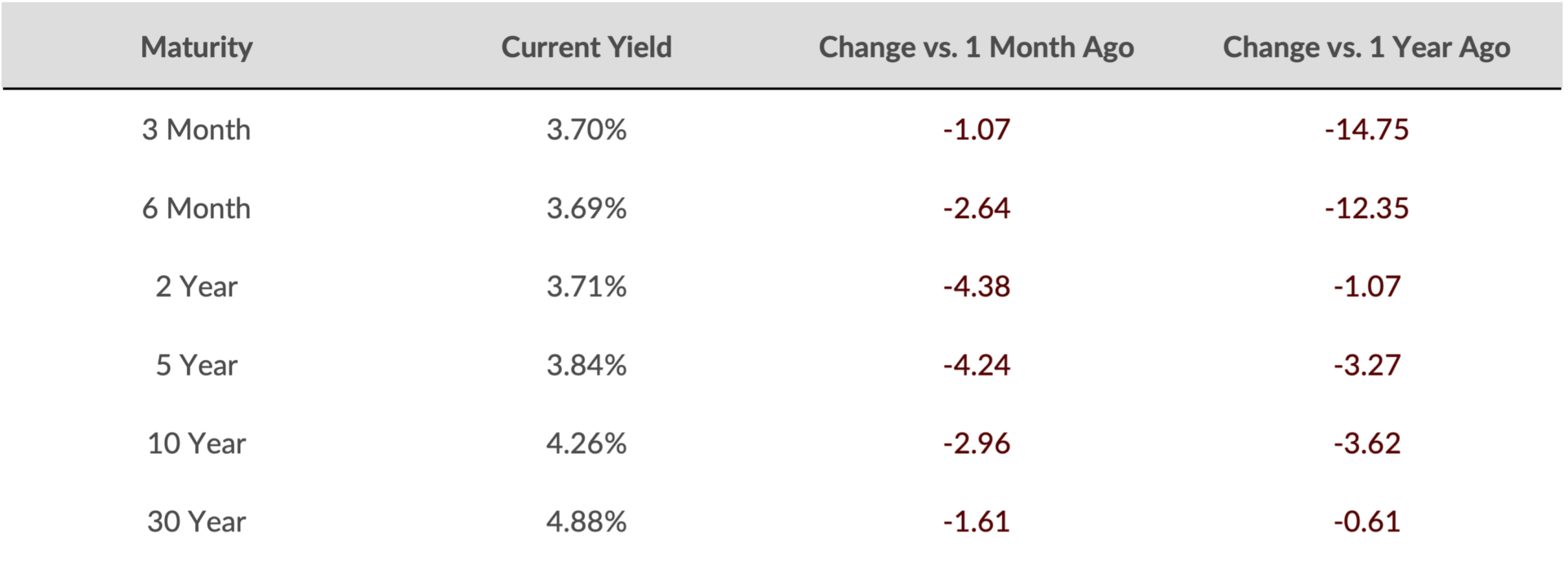
Sources: U.S. Department of the Treasury, Board of Governors of the Federal Reserve System, Charles Schwab
Record-Setting Week
Last week was one for record-breaking. By midweek, the S&P 500 and Nasdaq hit all-time highs. The S&P broke 7,000 for the first time, while the Nasdaq topped 24,000 for the first time.
The shift from “risk-off” to “risk-on” pushed the S&P over the 7,100 threshold for the first time on Friday. And the Nasdaq ended the week on a 13-day win streak, the longest positive streak since 1992. The Dow Industrials closed at 49,447.43, just below its all-time high set in early February 2026.7
This Week: Key Economic Data
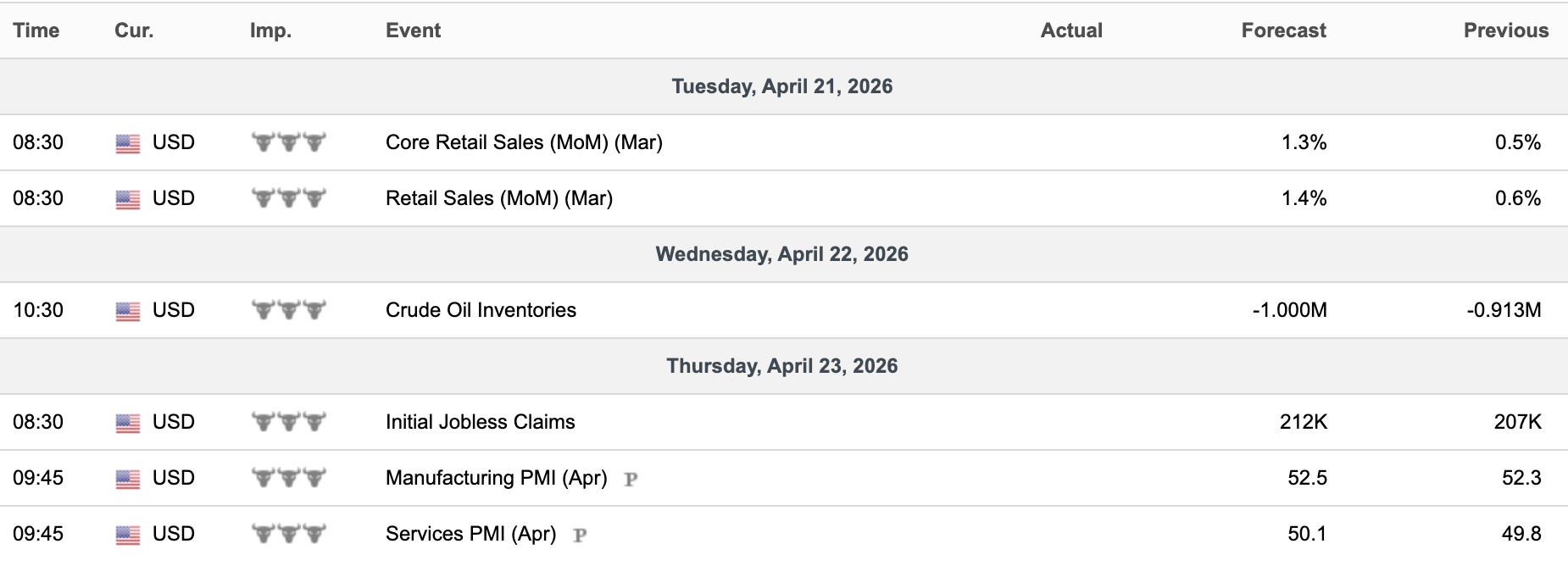
Source: Bloomberg Finance L.P.
This Week: Companies Reporting Earnings
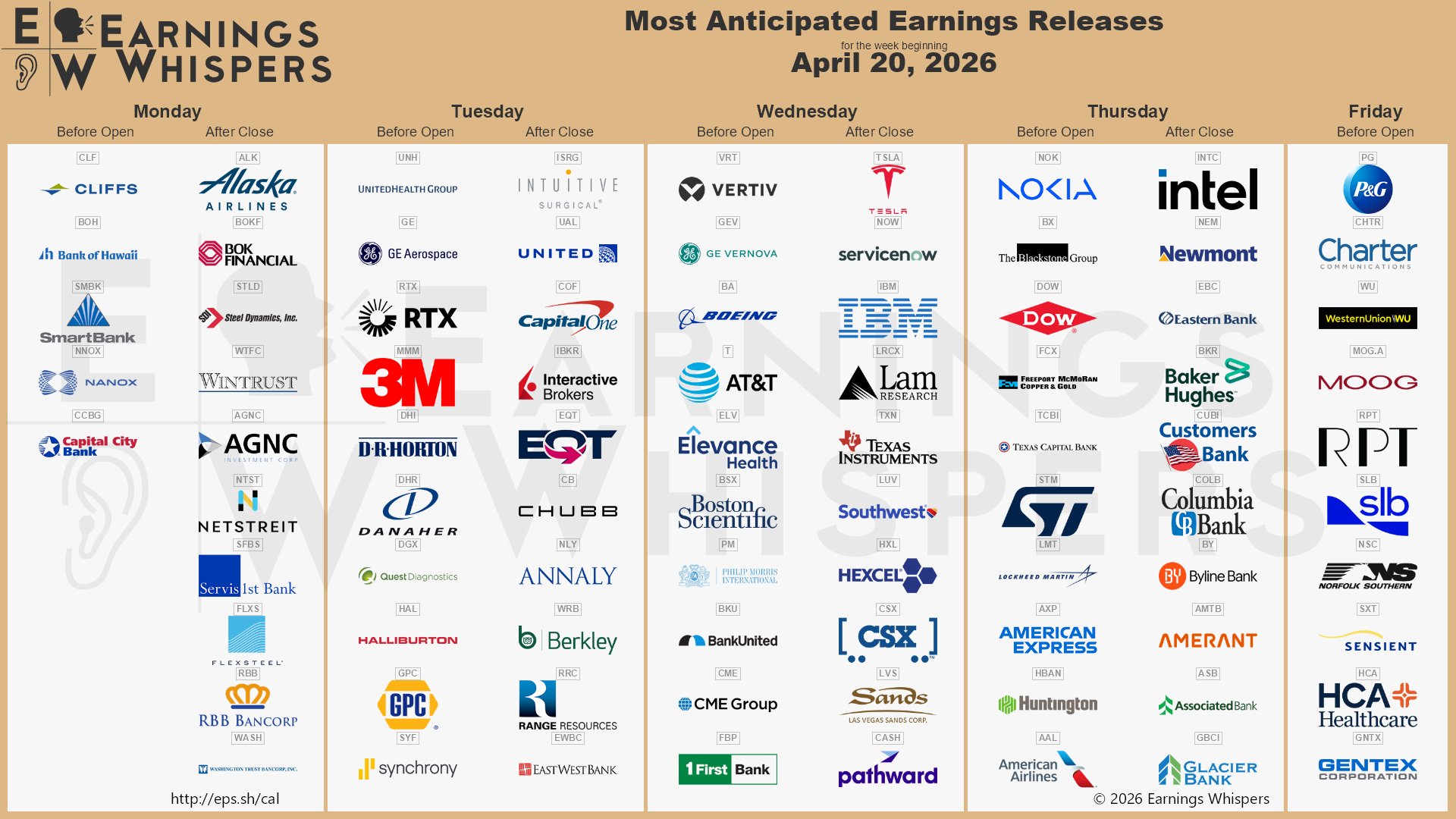
Source: EarningsWhispers
Author

Gary Aiken
Chief Investment Officer
Concord Asset Management
—
Footnotes and Sources
1WSJ.com, April 17, 2026
2Investing.com, April 17, 2026
3CNBC.com, April 13, 2026
4CNBC.com, April 15, 2026
5CNBC.com, April 16, 2026
6WSJ.com, April 17, 2026
7CNBC.com, April 15, 2026
Please remember that past performance may not be indicative of future results. Different types of investments involve varying degrees of risk, and there can be no assurance that the future performance of any specific investment, investment strategy, or product (including the investments and/or investment strategies recommended or undertaken by Concord Asset Management, or any non-investment related content, made reference to directly or indirectly in this article will be profitable, equal any corresponding indicated historical performance level(s), be suitable for your portfolio or individual situation, or prove successful. Due to various factors, including changing market conditions and/or applicable laws, the content may no longer be reflective of current opinions or positions. Moreover, you should not assume that any discussion or information contained in this article serves as the receipt of, or as a substitute for, personalized investment advice from Concord Asset Management. To the extent that a reader has any questions regarding the applicability of any specific issue discussed above to his/her individual situation, he/she is encouraged to consult with the professional advisor of his/her choosing.
The companies mentioned are for informational purposes only. It should not be considered a solicitation for the purchase or sale of any specific securities. Investing involves risks, and investment decisions should be based on your own goals, time horizon, and tolerance for risk. The return and principal value of investments will fluctuate as market conditions change. When sold, investments may be worth more or less than their original cost. The forecasts or forward-looking statements are based on assumptions, may not materialize, and are subject to revision without notice. The market indexes discussed are unmanaged and generally considered representative of their respective markets. Index performance is not indicative of the past performance of a particular investment. Indexes do not incur management fees, costs, and expenses. Individuals cannot directly invest in unmanaged indexes. The Dow Jones Industrial Average is an unmanaged index that is generally considered representative of large-capitalization companies on the U.S. stock market. Nasdaq Composite is an index of the common stocks and similar securities listed on the NASDAQ stock market and is considered a broad indicator of the performance of technology and growth companies. The MSCI EAFE Index was created by Morgan Stanley Capital International (MSCI) and serves as a benchmark of the performance of major international equity markets, as represented by 21 major MSCI indexes from Europe, Australia, and Southeast Asia. The S&P 500 Composite Index is an unmanaged group of securities that are considered to be representative of the stock market in general. U.S. Treasury Notes are guaranteed by the federal government as to the timely payment of principal and interest. However, if you sell a Treasury Note prior to maturity, it may be worth more or less than the original price paid. Fixed income investments are subject to various risks, including changes in interest rates, credit quality, inflation risk, market valuations, prepayments, corporate events, tax ramifications, and other factors. International investments carry additional risks, which include differences in financial reporting standards, currency exchange rates, political risks unique to a specific country, foreign taxes and regulations, and the potential for illiquid markets. These factors may result in greater share price volatility. Please consult your financial professional for additional information.
Concord Asset Management is neither a law firm, nor a certified public accounting firm, and no portion of the content should be construed as legal or accounting advice. A copy of Concord Asset Management’ current written disclosure Brochure discussing our advisory services and fees is available upon request or at https://concordwealthpartners.com/. Please Note: If you are a Concord Asset Management or Concord Wealth Partners client, please remember to contact the firm in writing, if there are any changes in your personal/financial situation or investment objectives for the purpose of reviewing, evaluating, and/or revising our previous recommendations and/or services, or if you would like to impose, add, or to modify any reasonable restrictions to our investment advisory services. Concord Asset Management and Concord Wealth Partners shall continue to rely on the accuracy of information that you have provided. Please Note: If you are a Concord Asset Management or Concord Wealth Partners client, please advise us if you have not been receiving account statements (at least quarterly) from the account custodian.